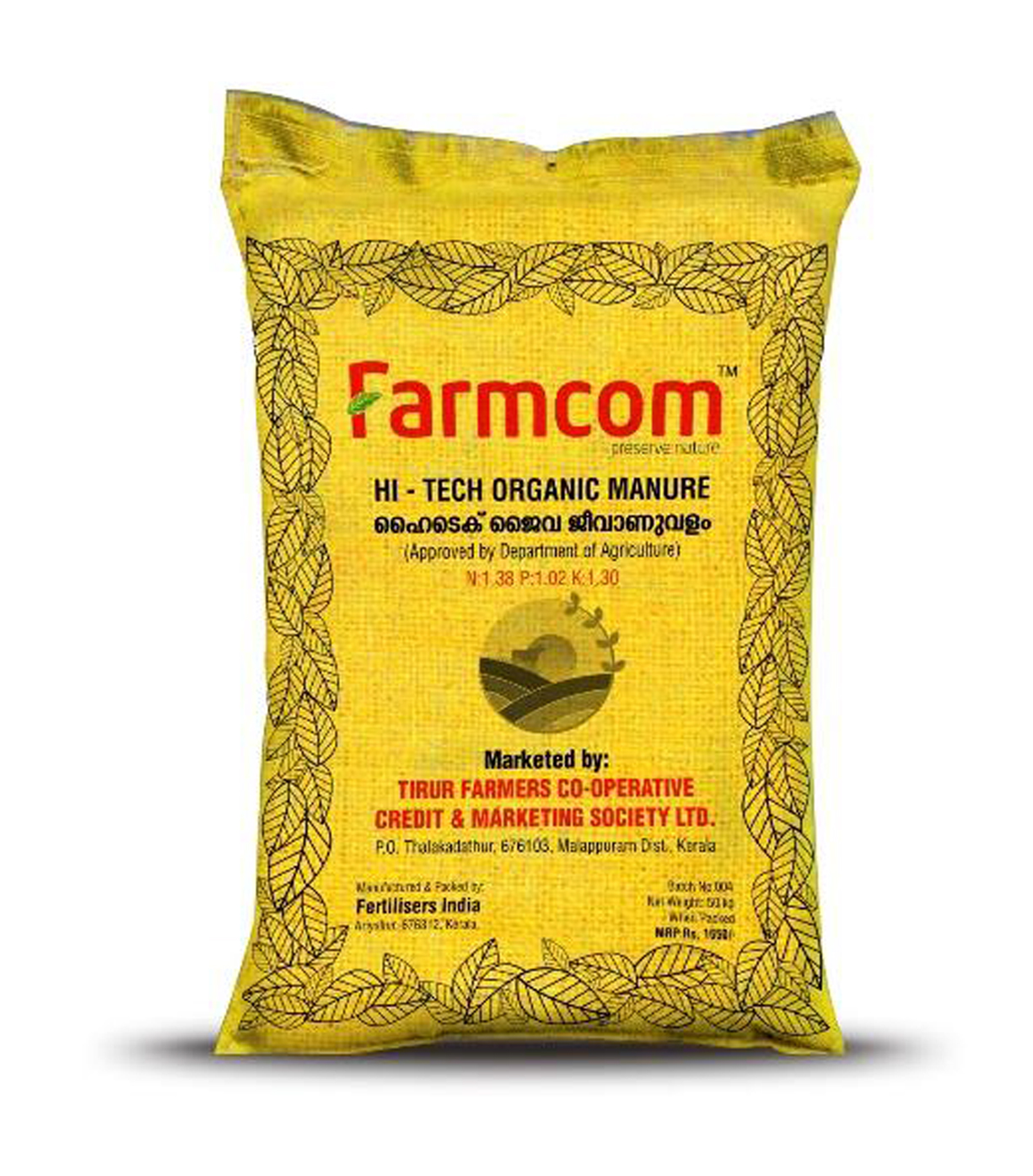
Farmcom Organic Manure
Safe, chemical-free organic matter creates an ideal environment that draws in earthworms, which naturally tunnel and aerate the soil.
Safe, chemical-free organic matter creates an ideal environment that draws in earthworms, which naturally tunnel and aerate the soil.
Farmcom Organic Manure: Press mud, Neem cake Bone powder, Bio- potash, Amino gold, Root Guard, Supersym gold, Bio magic gel, Organic fungicide, were composed in a coordinated ratio. As growth promoters and certain bacteria which are lab tested and required to keep a balanced organic structure of the soil is also dissolved in the manure, which gives the product in blackish dust form. Strong and adaptable for vegetables, flower gardens and such short duration crops
All the four products are available in 50Kg bags and in 2 Kg Bags
| Plant Type | Application | Methods | Incorporation | Watering |
|---|---|---|---|---|
| Flower Gardens | Mix 50–100 grams into the soil of the pit before planting | For established plants, sprinkle 25–50 grams around the base every 30 days | Gently rake the powder into the top 2 inches of soil | Water thoroughly immediately after application to activate the bio-potash and bacteria |
| Vegetables (Tomato, Chilli Brinjal) | Soil Preparation: Broadcast 200 grams per square metre across the bed before sowing | Individual Plants: Apply 20–30 grams per plant in a ring format around the stem base |
Distance: Keep the powder 2 to 3 inches away from the main stem. Frequency: Repeat the application once every 20–25 days during the growth phase. |
Water thoroughly immediately after application |
| Yam (Elephant Foot Yam, Dioscorea) | Pit Preparation: Mix 250–500 grams deeply into each planting pit with the loose soil. | Earthing Up: Add another 200 grams per plant during the first and second earthing-up operations (around 30 and 60 days after sprouting). | Placement: Ensure the dust is placed where the expanding tubers can access the bone powder and bio-potash. | Water thoroughly immediately after application |
| Short duration crops(carrot,radish) | Row Placement: Alternatively, apply it directly along the sowing furrows before dropping the seeds. | Basal Dressing: Incorporate 100–150 grams per square metre evenly into the topsoil during land preparation | Single Dose: Because these crops grow fast, a single, strong basal dose is usually sufficient | Water thoroughly immediately after application |
| Application tips | Avoid Open Exposure: Always cover the manure with a thin layer of soil to protect from direct sunlight . Moisture is Key : The microbes, root guards, and consistent soil moisture to dissolve and colonise the root zone effectively.
Storage: Keep the remaining dust in a cool place |
|||
| Pots and containers | Pre-Mixing: Blend 1-part manure with 9 parts potting soil before filling your pots
Top Dressing: Scratch 2 to 3 tablespoons into the top layer of soil every 3 to 4 weeks. Avoid Edge Clumping: Keep the powder away from the container rim to prevent it from baking into a hard crust. Watering Method: Water gently and slowly right after application so the bio-magic gel absorbs moisture without washing out of the bottom drainage holes |
|||
| Raised Beds | Broadcast 100–150 grams per square metre across the surface and mix it into the top 4 inches of soil before planting | |||
| Open field | Basal Broadcasting: Apply 500–750 kg per acre evenly across the field during the final plowing or land preparation stage.
Ring Placement: For wide-spaced crops like yam, apply 200–300 grams in a 1-foot ring around the base of the plant. Timing: Always apply the dust early in the morning or late in the evening |
|||
| Re-application schedule | Pots & Containers: Reapply every 21 to 30 days. Pots lose nutrients and microbes quickly through bottom drainage holes.
Raised Beds (Vegetables & Flowers): Reapply every 30 to 45 days during the active growing and fruiting seasons. Open Fields (Longer Crops like Yam): Apply a heavy dose at planting, followed by split doses at 30 days and 60 days (during earthing up). Short-Duration Crops (Greens/Radish): • No reapplication needed. A single strong dose during soil preparation lasts their entire 30-to-45-day life cycle. The Root Guard and Organic Fungicide components embedded in Farmcom Organic Manure work biologically (typically using beneficial microbes like Trichoderma species) to actively shield your crops from devastating soil-borne issues |
|||
| Soil-Borne Fungal Pathogens (Targeted by Organic Fungicide) | Root Rot (Rhizoctonia, Pythium, & Phytophthora): This prevents roots from turning brown, mushy, and decaying due to waterlogging or poor drainage. It is incredibly critical for Yam tubers and potted flowers.
Fusarium Wilt: Fights off the notorious fungus that blocks the vascular system of vegetables (like tomatoes and chilies), which causes them to suddenly droop, yellow, and die from the bottom up. Damping-Off: Protects germinating seeds and young seedlings in short-duration crops or nursery beds from collapsing at the soil level right after sprouting. |
|||
| Root-Parasitic Pests (Targeted by Root Guard & Neem Cake) | The synergistic combination of Root Guard microbes and natural Neem Cake forms a hostile barrier against destructive subterranean pests.
Root-Knot Nematodes: Destroys and repels microscopic soil worms that pierce plant roots to cause irregular swelling, galls, or knots. Nematode damage severely stunts short-duration crops and ruins vegetable yields. Termites and White Grubs: Neem cake acts as a natural anti-feedant, stopping root-chewing grubs from destroying the main root systems of ornamental flowers and heavy tuber crops like Yam. |
|||
| Broad Soil Structural Benefits | Pathogen Exclusion: Because the manure populates the root zone with billions of lab-tested "good" bacteria and fungi, it literally crowds out bad pathogens by hogging the available space and nutrients
Plant Defence Trigger: Exposure to these biostimulants signals the plant to naturally step up its own internal immunity, making your flower gardens and vegetable beds much more resilient to sudden weather stress. |
|||
| Early Signs of Root Rot vs. Nematode Damage | Sudden Wilting: Leaves droop even when the soil is completely wet or damp.
Stem Discoloration: The base of the stem near the soil line turns brown, black, or mushy. Stunted Growth: New leaves stay tiny, turn pale yellow, and drop off prematurely. Foul Odour: Digging slightly into the soil reveals a sour, rotting smell from decaying roots. |
|||
| Root Rot (Fungal Attack) | Root Appearance: If pulled up, roots look brown, translucent, and easily break apart instead of being firm and white.
Root-Knot Nematodes (Microscopic Worms) Midday Wilting: Plants wilt heavily under midday sun but mysteriously recover late in the evening or morning. Nutrient Deficiency: Leaves turn yellow, purplish, or pale, mimicking a lack of nitrogen or iron because the roots cannot absorb food. Knots and Galls: Digging up a sacrificial plant reveals irregular swellings, lumps, or "beads" along the roots. Bushy, Short Roots: The root system looks excessively branched, stunted, and shallow. |
|||